
Two streets apart in the same Kent town, the same plastic tub can be recycling in one kitchen and rubbish in the next. It isn't carelessness. Kent doesn't have one set of bin rules — it has more than a dozen.
Here's how the system actually works, which items trip people up most, and how to find your own collection day in about two minutes.
Who decides what goes in which bin
Kent runs a two-tier waste system. Your district or borough council — Canterbury, Maidstone, Thanet, Ashford, Dover, Folkestone & Hythe, Gravesham, Dartford, Sevenoaks, Swale, Tonbridge & Malling, Tunbridge Wells — collects from your kerbside. Kent County Council is the waste disposal authority: it deals with what happens once the lorry has tipped its load, and it runs the household waste recycling centres. Medway is a unitary authority and handles both jobs itself.
That split explains the confusion. Collection is local, so each district sets its own accepted list, its own bin colours and its own timetable. There is no single Kent-wide answer to "can I recycle this?"
What actually happens to your recycling
Mixed kerbside recycling usually goes to a materials recovery facility, where it is sorted by machine and by hand. Trommels screen out small items, magnets pull out steel cans, eddy currents flick out aluminium, optical sorters identify different plastics, and pickers remove whatever shouldn't be there.
The system depends on material arriving reasonably clean and reasonably separated — which is why contamination matters so much. One greasy takeaway box or a tangled length of garden hose can wrap around machinery and force a whole load to be pulled out. When that happens, the contents generally aren't recycled slowly; they aren't recycled at all. It's a blunt process, and it rewards a bit of care at the kitchen bin.
The items people bin wrong most often
These come up again and again in council guidance across the county. Check your own district's list before acting on any of them.
- Greasy pizza boxes. Clean card and lids can be recycled; the oily base can't. Tear it in half rather than putting the lot in the paper bin.
- Coffee cups. Most are lined with a plastic film, so they belong in general waste unless your council says otherwise.
- Plastic film, bags and wrap. Cling film, bubble wrap and carrier bags tangle in sorting machinery. Some large supermarkets offer front-of-store collection for soft plastics.
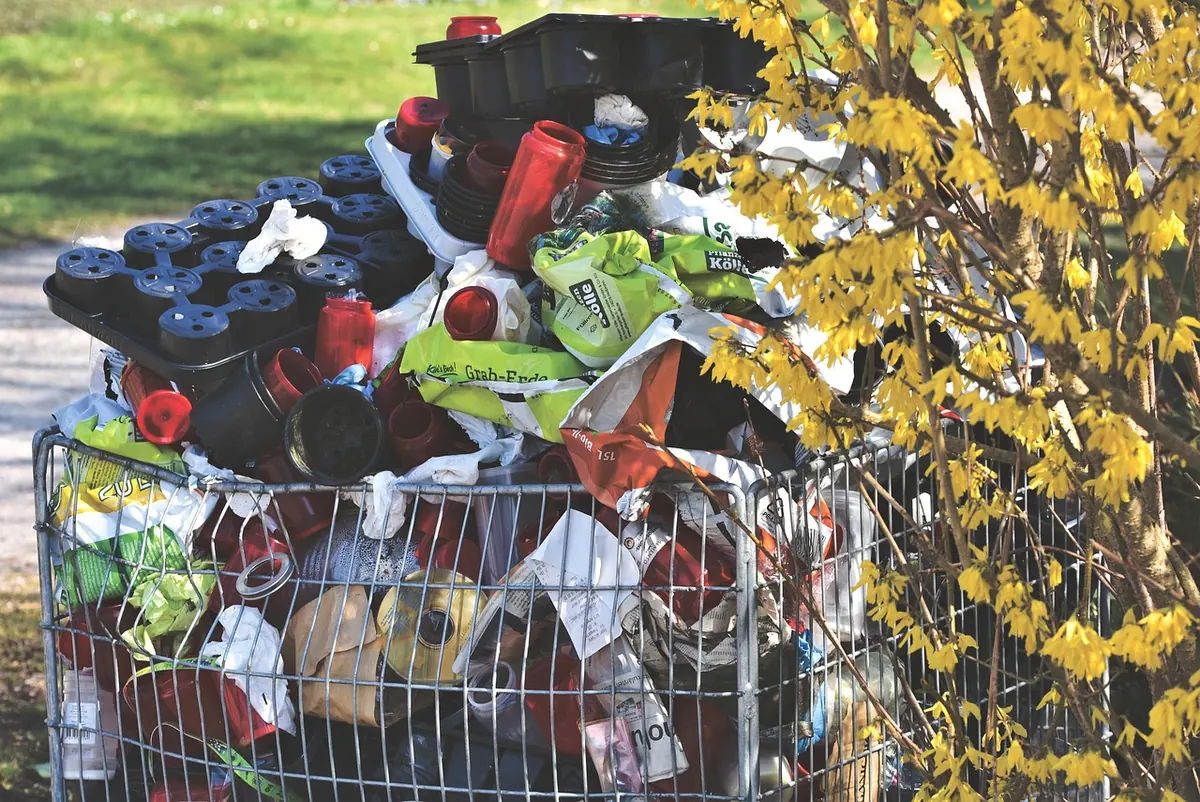
- Black plastic trays. Many sorting systems struggle to detect carbon-black plastic, and plenty of councils exclude it. If it's black and flimsy, it's usually rubbish.
- Crisp packets and sweet wrappers. General waste, however shiny they look.
- Glass. Some districts collect it at the kerbside, usually in a separate box; others expect you to use a bottle bank. Never mix it in with paper and card.
- Pyrex, drinking glasses, mirrors and vases. They melt at a different temperature from bottles and jars. Bottle bank or tip, not the recycling bin.
- Batteries. Never in any kerbside bin — they start fires in lorries and at waste plants. Take them to a shop with a collection point or to a recycling centre.
- Nappies and wet wipes. General waste, always, including the ones labelled flushable.
- Textiles. Some councils collect clothes and shoes in a separate bag; otherwise use a charity bank.
- Shredded paper. Often rejected because the shreds are too small for the sorters. Compost it at home or bag it for general waste.
- Cartons, pump dispensers and toothpaste tubes. Tetra Pak-style cartons are collected by some districts and not others. Tubes and pumps are almost always rubbish.
Bin colours, boxes and the small print
Don't assume that because a friend in the next town puts recycling in a green bin, yours works the same way. Some Kent districts use green for general waste and a darker bin for recycling; others do the opposite. Many supply a separate box for glass and another for paper.
Reasons a collection gets refused
Most councils won't take side waste — the extra bags stacked beside a full bin. Lids should be closed and bins shouldn't be overloaded, and some districts impose weight limits. Garden waste is normally a paid subscription with a sticker or permit, and it isn't for food scraps, soil or rubble.
Food waste is the next big change
Under the government's Simpler Recycling reforms, councils in England are expected to collect food waste weekly from households — most by the end of March 2026 — alongside a standardised set of core materials for recycling. Some Kent districts already run a weekly food caddy; others are still rolling theirs out. If yours hasn't arrived, a kitchen caddy is still worth starting, and if you have space, a compost bin takes fruit and vegetable peelings, tea bags and clean cardboard off your hands entirely.
How to check your own collection day
- Search for your district council's name plus "bin collection day". Every Kent district runs a postcode lookup on its own website.
- Enter your postcode and select your address. If a street is split between rounds, results can differ house by house.
- Save the answer. Add the dates to your phone calendar, set a weekly reminder, or download your council's app if it has one.
- Write it on the fridge if you'll forget. Some councils still deliver a printed calendar each year.
- Check before every bank holiday. Most collections shift by a day or two, and schedules often run a day behind for the rest of that week.
- Put bins out the night before or by the stated time — often early morning — and bring them in once they're emptied.
If a bin is missed, report it to your district council rather than leaving it out for days. Most ask for reports within a short window and will send a crew back if you've followed the rules.
A two-minute routine that keeps your load out of the waste pile
Rinse jars and tubs rather than scrubbing them — a quick swill is enough. Squash bottles and flatten card so there's room in the bin. Keep a lidded caddy on the worktop, a box for glass by the door, and a jar for used batteries that goes to the shop when it's full.
And when you're standing there holding something odd — a broken toy, a plant pot, a padded envelope — apply the rule that saves more recycling than any other: if in doubt, leave it out, and check your council's A–Z list later. One
Photo: Ralphs_Fotos / Pixabay